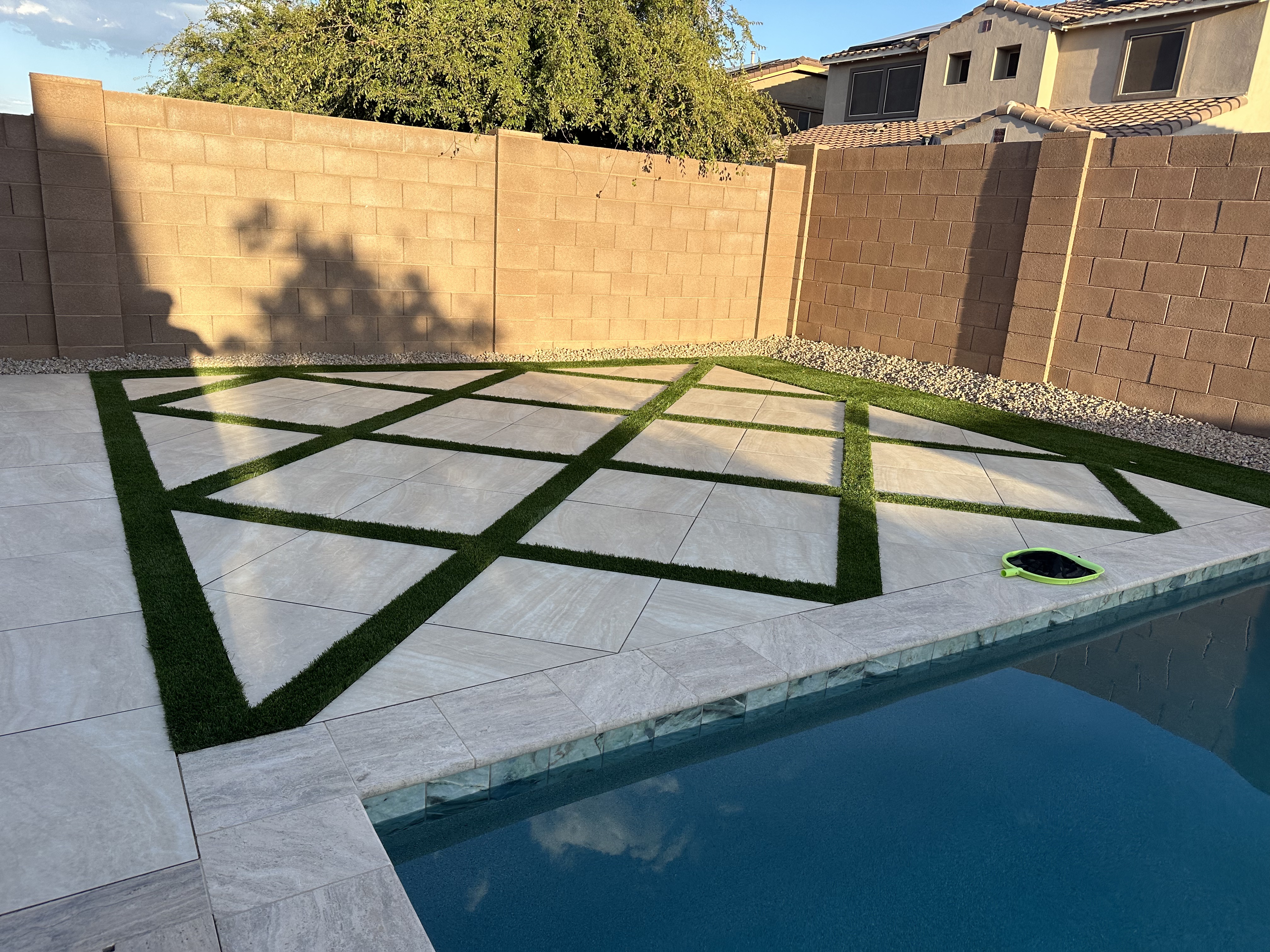
Pool deck material selection is one of the highest-stakes decisions in any Arizona backyard project. The wrong choice bakes your feet at 150°F, cracks under pool chemistry exposure, or looks dated within a few years. Let's compare the two most popular options honestly.
How Each Material Handles Arizona Heat
Surface temperature in direct Arizona sun is the first thing to understand. Both materials get hot — but they behave differently.
Travertine has a naturally porous surface that reflects rather than absorbs radiant heat. Its light color and thermal mass characteristics mean it stays meaningfully cooler underfoot than sealed concrete or dark concrete pavers. Travertine surface temperatures typically run 20–35°F lower than comparably colored concrete products in direct sun.
Concrete pavers vary widely by color, texture, and finish. Light-colored, tumbled concrete pavers perform reasonably well — but darker tones and smooth-finished products can exceed 150°F surface temperature on a July afternoon. Texture matters too: a brushed or tumbled finish diffuses radiation better than polished or smooth surfaces.
| Category | Travertine | Concrete Pavers |
|---|---|---|
| Surface temp (direct sun) | Cooler — natural heat reflection | Varies — light colors perform well |
| Slip resistance (wet) | Excellent — natural texture | Good — tumbled/brushed finishes |
| Pool chemical resistance | Good — requires sealing for long-term | Excellent — dense concrete resists chemical |
| Color stability | Natural variation ages beautifully | Some fading over time — quality varies |
| Frost resistance | Fair — porous, needs sealing in freeze areas | Excellent |
| Repair / replacement | Individual pieces replaceable | Individual pieces replaceable |
| Cost (installed) | $18–$28/sq ft installed | $12–$20/sq ft installed |
| Appearance | Timeless natural stone look | Wide range — modern to classic |
Maintenance Differences in Arizona
Travertine is porous and needs to be sealed every 2–3 years to protect against pool water and UV degradation. Without sealing, pool chemicals can slowly etch the surface and cause staining. With proper sealing, travertine is low maintenance and ages beautifully for decades.
Concrete pavers are denser and more chemically resistant in their base form. They still benefit from sealing — it prevents efflorescence (white mineral bloom) and deepens color — but the maintenance window is longer, typically 3–5 years between applications.
Our Recommendation for Arizona Pool Decks
For most of our West Valley clients, we recommend light-colored, tumbled travertine for pool deck applications. The cooler barefoot temperature is significant when you're stepping out of the pool onto a surface that's been baking in 115°F heat all day. The natural look also pairs better with most Arizona landscaping styles.
For tighter budgets, a light buff or cream concrete paver in a tumbled finish performs well and costs $5–$8/sq ft less than travertine. The performance gap is smaller than people expect when you choose the right color and finish.
Important: Whatever material you choose, the pool deck must slope away from the pool edge at a minimum grade of 1/8" per foot. Flat or reverse-slope decks cause water intrusion under the deck, which accelerates base failure. This is a detail we see done incorrectly all the time.
Building or Renovating a Pool Deck?
We'll show you samples of both options, walk your pool area, and give you a detailed quote. We'll also catch any drainage or slope issues before they become expensive problems.
Schedule a Free Pool Deck Consultation →